
Copyright © WHERE, Inc. All Rights Reserved.


SOLUTION

Smart Building IoT&Digital Transformation
Three Smart Building IoT / DX Solutions
Guided by the concept of Multi-Building Connect, this multi-purpose smart-building foundation enables facilities to Connect and Activate regardless of building type, constraints, or existing systems. Designed for future integration with urban OS and smart-city platforms, it drives the creation of a smarter society that goes beyond what we imagine today.
Smart buildings are next-generation facilities that use IoT and sensing technologies to collect, analyze, and apply diverse data—from spatial conditions and equipment status to the location and movement of people and objects and environmental factors such as temperature, humidity, and lighting. These data-driven insights enable building-wide optimization of operations and services.
Real-time data—capturing movement patterns, location information, and environmental conditions—flows from sensors and beacon devices to form a digital twin of the building. This digital twin then powers automated, data-driven control across functions such as HVAC and lighting, access and seating management, and robotic cleaning and transport support.
Smart-building capabilities can be implemented not only in new construction but also retrofitted into existing buildings, improving performance and asset value while providing a foundation for more sustainable urban development.
DX for every experience—powered by WHERE’s EXBeacon Platform
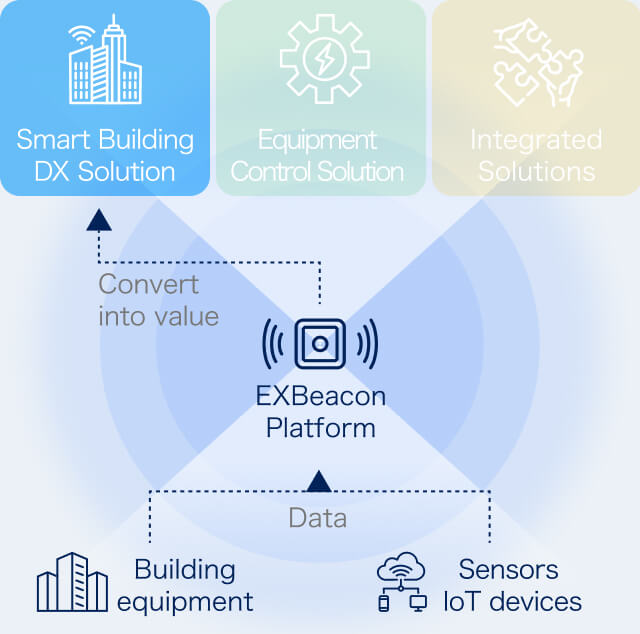
EXBeacon Platform is a foundation that gives buildings the Ability to Connect and operate digitally. By linking data from spaces, people, and equipment, it generates new ways of working and delivering services, evolving every experience toward the future.
 EXOffice
By unifying location, environmental, door-status, and reservation data, ExOffice delivers real-time occupancy insights and deeper office analytics that drive smarter, more adaptive workplaces.
EXOffice
By unifying location, environmental, door-status, and reservation data, ExOffice delivers real-time occupancy insights and deeper office analytics that drive smarter, more adaptive workplaces.
 Restroom Occupancy Status Display
Restroom congestion and stall availability are visualized using door-status sensor data.
Restroom Occupancy Status Display
Restroom congestion and stall availability are visualized using door-status sensor data.
 Congestion and Utilization Display
Congestion levels and utilization in shared areas are visualized using location data and human-presence sensor information.
Congestion and Utilization Display
Congestion levels and utilization in shared areas are visualized using location data and human-presence sensor information.
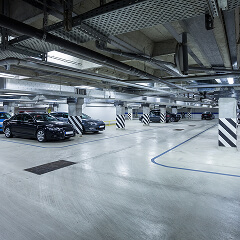 Parking Management
Parking availability for store tenants is visualized using location data and Doppler sensor information.
Parking Management
Parking availability for store tenants is visualized using location data and Doppler sensor information.
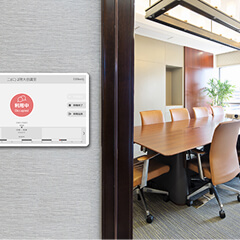 Shared Space Hotelling
Reservation and congestion information for shared building spaces is visualized using meeting-room and desk reservation data.
Shared Space Hotelling
Reservation and congestion information for shared building spaces is visualized using meeting-room and desk reservation data.
 Shared Meeting Room Management
Shared meeting rooms within the building are efficiently allocated and operated across multiple tenants using location data, authentication information, human-presence sensor data, and meeting-room reservation information.
Shared Meeting Room Management
Shared meeting rooms within the building are efficiently allocated and operated across multiple tenants using location data, authentication information, human-presence sensor data, and meeting-room reservation information.
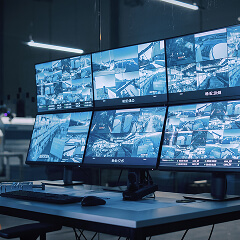 Automated Security Activation
Automated security systems are triggered using location data and authentication information.
Automated Security Activation
Automated security systems are triggered using location data and authentication information.
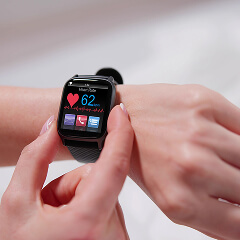 Health Monitoring
Employee health conditions are monitored using vital-sign data.
Health Monitoring
Employee health conditions are monitored using vital-sign data.
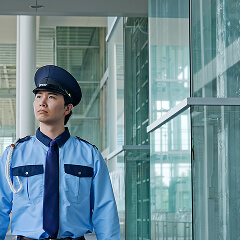 Security Management
Patrol records and image-based reports for security staff are generated using location data, authentication information, and video footage.
Security Management
Patrol records and image-based reports for security staff are generated using location data, authentication information, and video footage.
Smart Equipment Control for Energy and Labor Efficiency
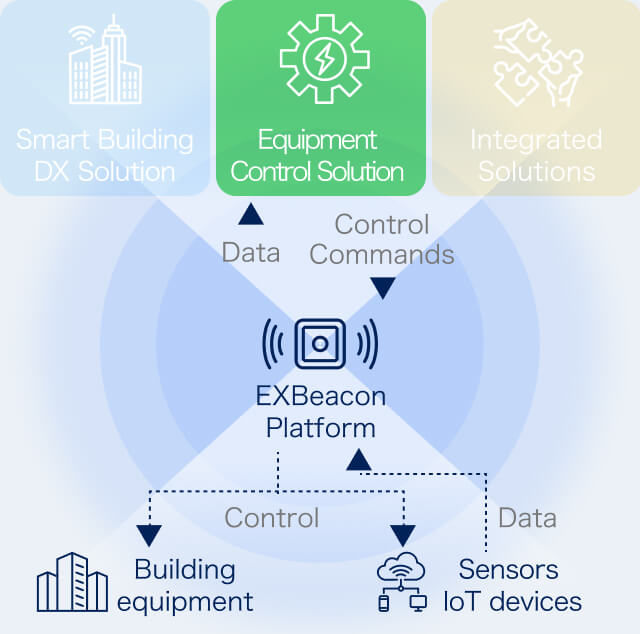
Sensing data—such as location, environmental conditions, restroom occupancy, and congestion levels—can be integrated via APIs with building systems like HVAC and lighting, enabling data-driven control that achieves both energy savings and labor efficiency.
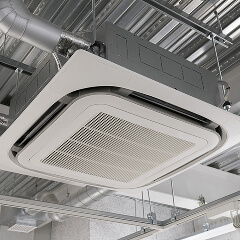 HVAC Control
HVAC on/off and adjustments are automated using location data, environmental sensor data, human-presence detection, and meeting-room reservation information.
HVAC Control
HVAC on/off and adjustments are automated using location data, environmental sensor data, human-presence detection, and meeting-room reservation information.
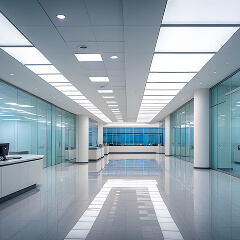 Lighting Control
Lighting on/off and brightness adjustments are automated using location data, environmental sensor data, human-presence detection, and meeting-room reservation information.
Lighting Control
Lighting on/off and brightness adjustments are automated using location data, environmental sensor data, human-presence detection, and meeting-room reservation information.
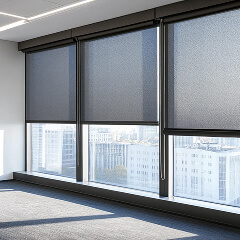 Automated Blinds Control
Blinds are automatically controlled using location data, environmental sensor data, human-presence detection, and meeting-room reservation information.
Automated Blinds Control
Blinds are automatically controlled using location data, environmental sensor data, human-presence detection, and meeting-room reservation information.
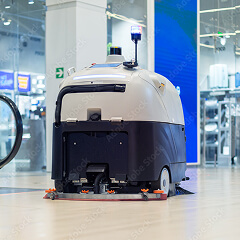 Autonomous Robotic Cleaning
Autonomous Robotic cleaning is controlled using location data and human-presence sensor information.
Autonomous Robotic Cleaning
Autonomous Robotic cleaning is controlled using location data and human-presence sensor information.
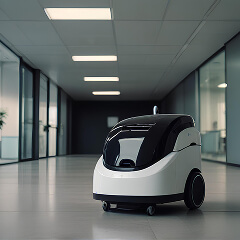 Autonomous Robotic Patrol
Autonomous robotic patrol operations are controlled using location data, human-presence detection, and video information.
Autonomous Robotic Patrol
Autonomous robotic patrol operations are controlled using location data, human-presence detection, and video information.
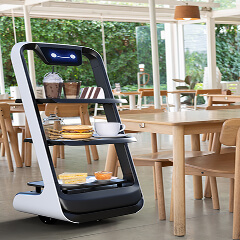 Robotic Tenant Delivery
Robotic delivery within the facility—such as shopping or package drop-offs for tenants—is enabled using location data.
Robotic Tenant Delivery
Robotic delivery within the facility—such as shopping or package drop-offs for tenants—is enabled using location data.
 Elevator Control
Elevators are automatically directed to assigned floors using authentication information.
Elevator Control
Elevators are automatically directed to assigned floors using authentication information.
 Surveillance Camera Control
Remote surveillance via security cameras is controlled using video information.
Surveillance Camera Control
Remote surveillance via security cameras is controlled using video information.
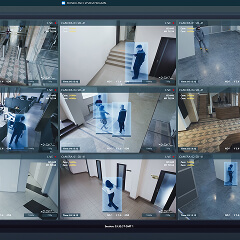 Suspicious behavior detection
Suspicious behavior and unauthorized entry are monitored using authentication data and video information through AI-based anomaly detection.
Suspicious behavior detection
Suspicious behavior and unauthorized entry are monitored using authentication data and video information through AI-based anomaly detection.
Integration Solutions That Expand with Every Technological Advance
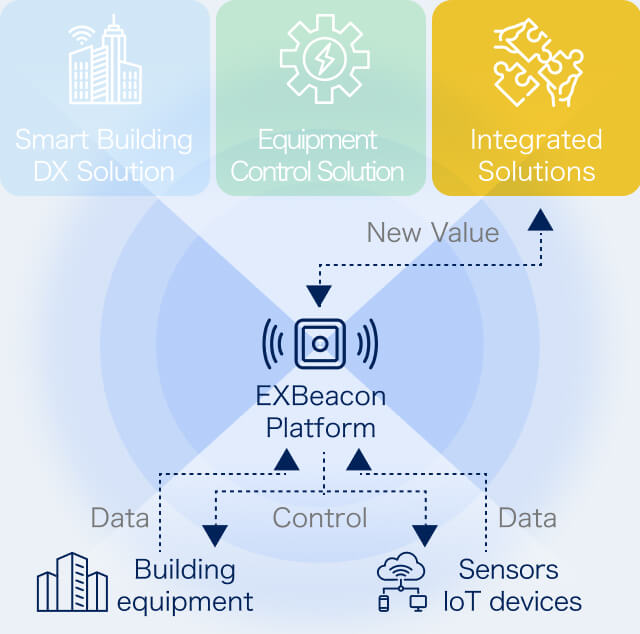
Connectivity that adapts to evolving technologies expands the possibilities of smart buildings—linking with emerging services and devices such as service robots, personalized wellness solutions, energy systems, and disaster-prevention platforms, and enabling a smart-building environment that continues to grow.
We envision a future where an entire urban community connects and operates as if it were a single building. In a city where buildings integrate with urban OS and smart-city platforms, robots collaborate to autonomously perform cleaning and deliveries, and evacuation guidance during emergencies is optimized in real time based on people’s location data. Energy flows between buildings, enabling area-wide efficiency.
As spaces, people, equipment, and data connect beyond individual buildings, the physical and digital worlds converge—shaping a groundbreaking urban society.
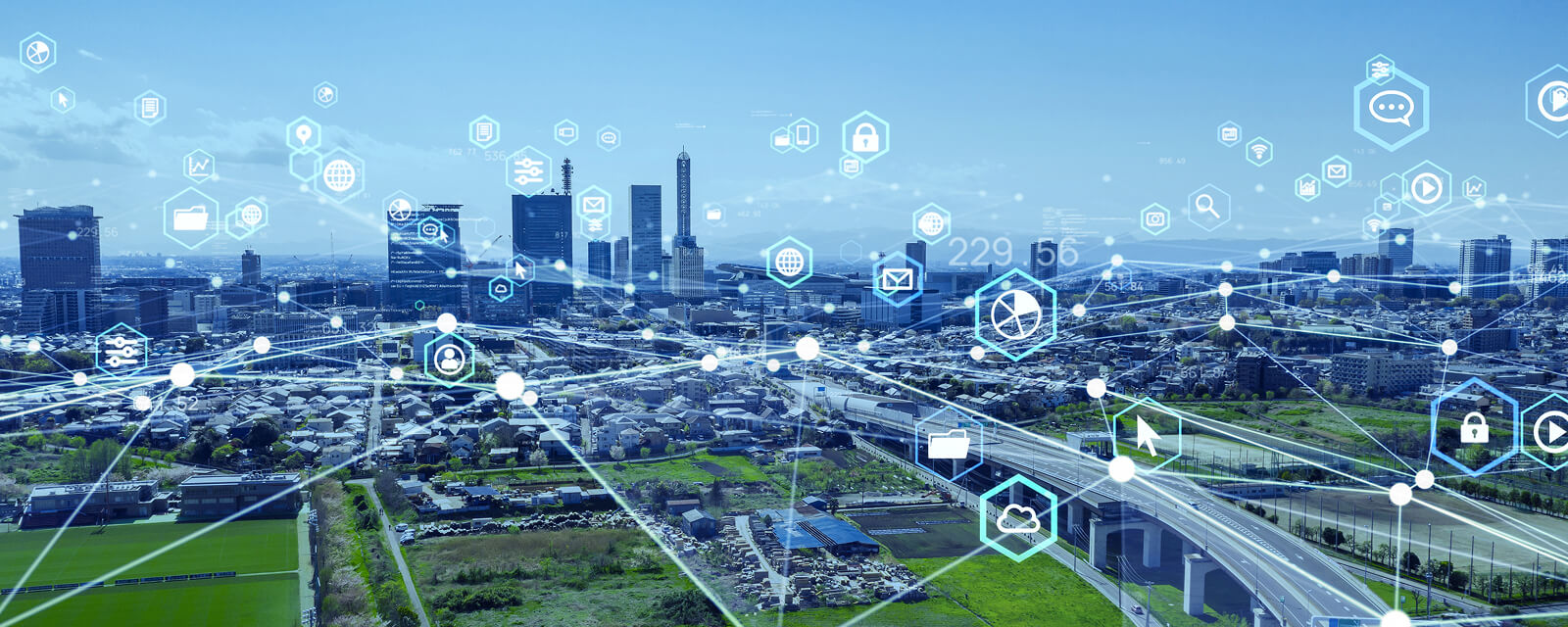


Lighting, HVAC, blinds, and other room systems are automatically controlled based on meeting-room reservation schedules, ensuring a comfortable and efficient environment from start to finish.
Scope of WHERE’s Services
Periodic retrieval of schedule data from Outlook and other systems
Creation of equipment-control scenarios based on schedules
Execution of control commands aligned with equipment-control scenarios"
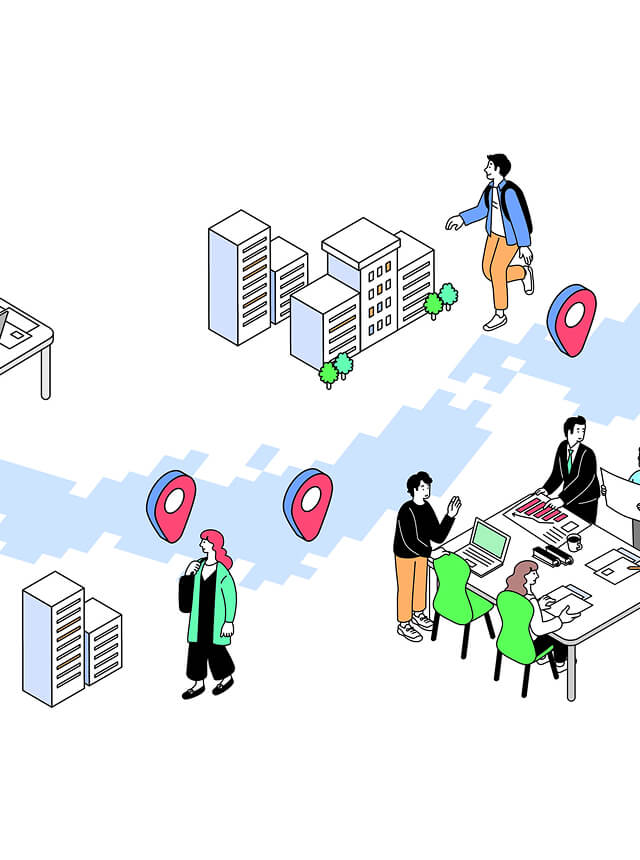
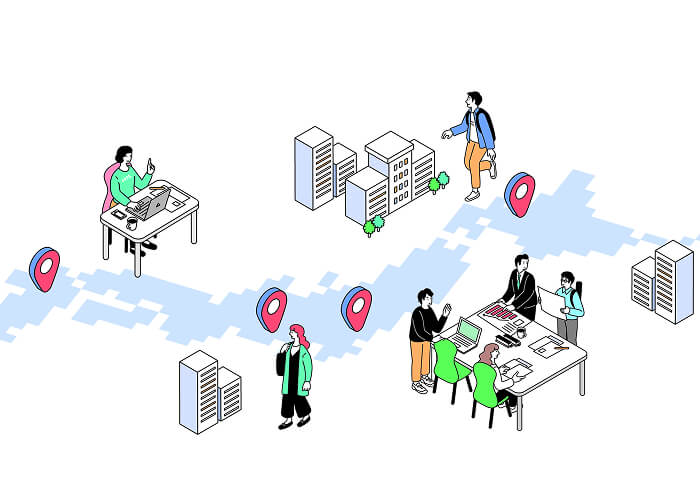
Employees can enter buildings and rooms across all sites without location-based restrictions. Multi-factor authentication—such as facial recognition and QR codes—is unified across sites, while specific areas can be controlled individually. This enables flexible workstyles while maintaining robust security.
Scope of WHERE’s Services
Providing authentication devices
A centralized platform for managing access data across multiple sites
Flexible access control settings based on user attributes (employees, guests, contractors, etc.)
Individualized area control with manager approval, excluding designated zones from default rules
Integration with attendance management and external systems